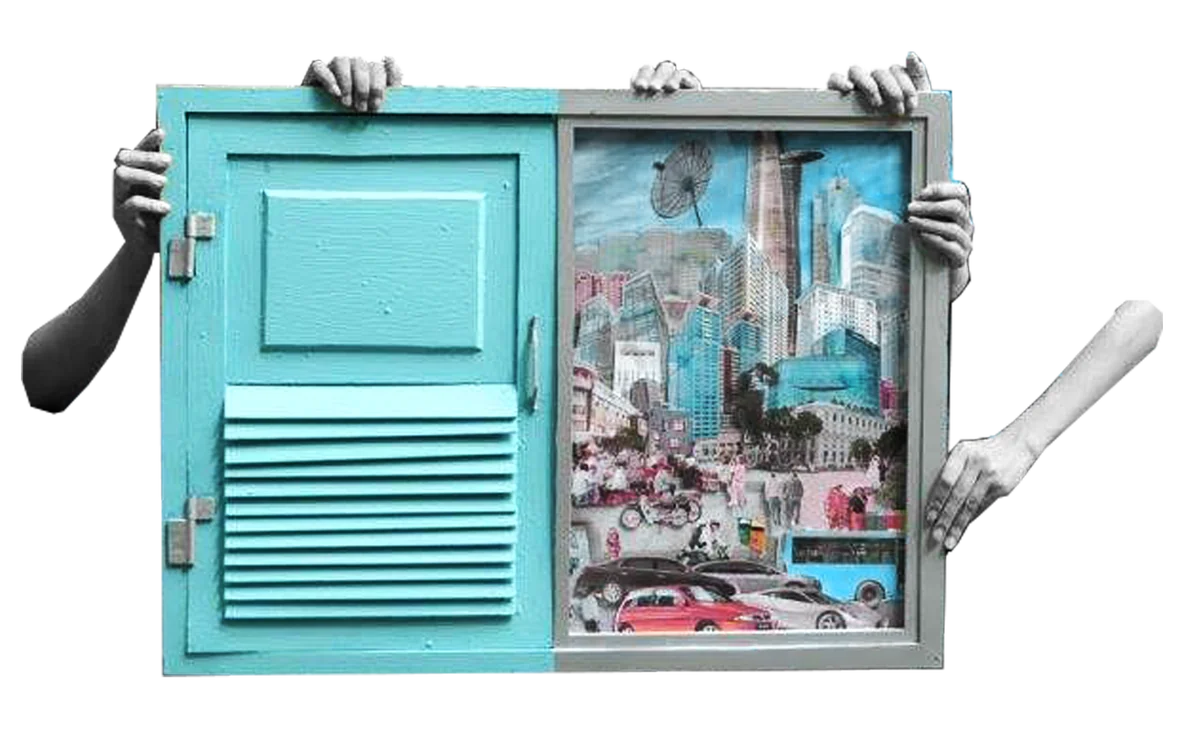
After the war with U.S. (also known as the Vietnam War through the lens of Western media), Vietnam was placed under an economic embargo, severely limiting foreign trade outside of communist countries. The embargo was lifted in 1994, leading to a surge in foreign investment and rapid development. Ho Chi Minh City (known as Saigon during French colonial rule) experienced a massive bloom and quickly filled with high-rises and commercial buildings. These buildings brought a post-modern architecture style featuring large glass panels and seamless façade. This is a contrast to the existing colonial architecture, which relied heavily on louvered windows and doors with small creeks for ventilation suited to the humid and sub-tropical weather.
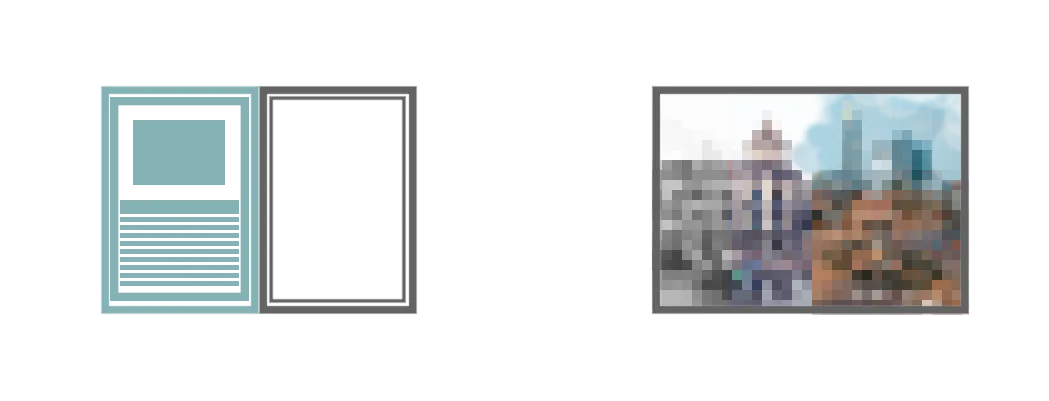
However, not everyone could keep up with this new rapid modernization. As the main economic hub of Southern Vietnam, Ho Chi Minh City attracted many migrants from other provinces seeking better opportunities. These migrants brought their tradition of running small, informal street vendors, (often labeled as illegal), creating a contrast but vibrant image against the city’s portrait - glass façade, formal suits, and air-conditioned shops framed in aluminum. As someone who grew up in the heart of this city, I witnessed these changes firsthand across several areas:
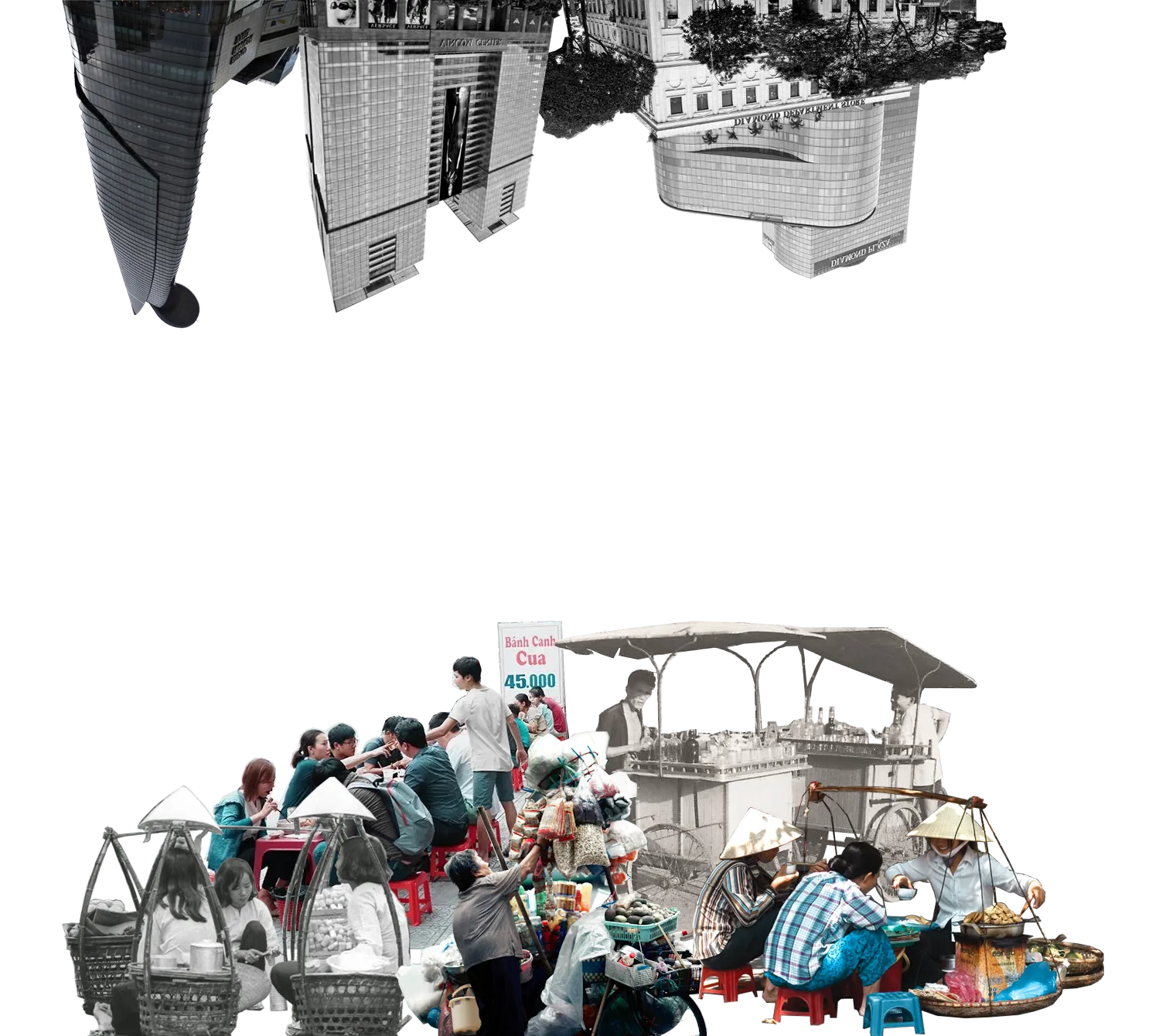
As someone who grew up in the heart of this city, I saw many different types of changes:
- Infrastructure and architecture: from small buildings to high-rises
- Vehicles and speed pace: from bicycles and bikes to cars and buses
- Commercial activities: from the street to in the store, hiding behind large windows