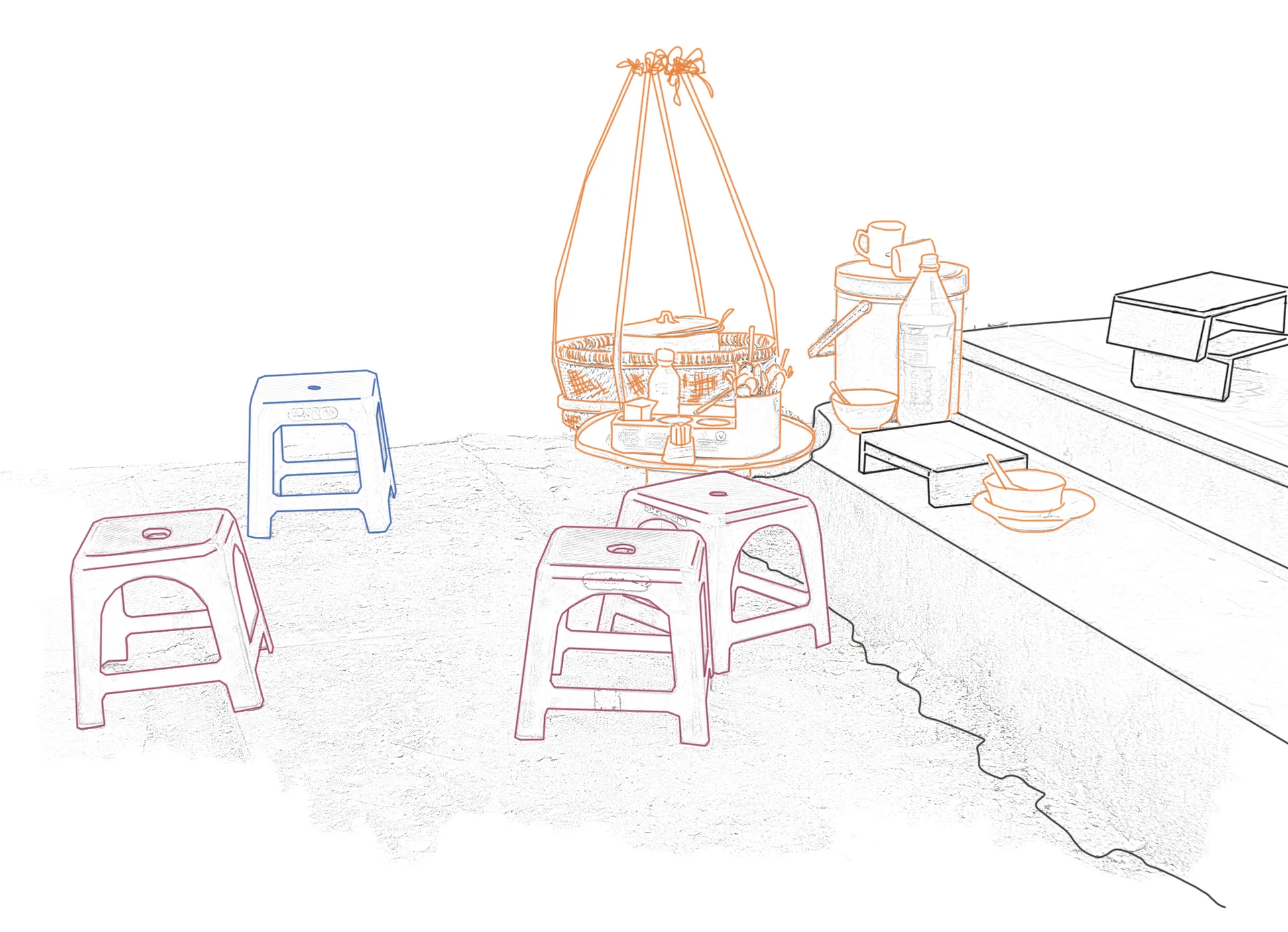
Ho Chi Minh city is one of the most vibrant cities in Vietnam, an image defined by high-rise buildings and bustling commercial streets. But alongside modern stores and restaurants, another side of the city is shaped by the majority of its population: the informal economy. This informal sector provides different services: from food and beverages (spanning filling daily meals to quick snacks), to street-side salon and everyday goods like household items and toys. Across these street services, small plastic stools - the kind that force you into a low squat with your knees sitting higher than your hips, are the most common items that you could see.
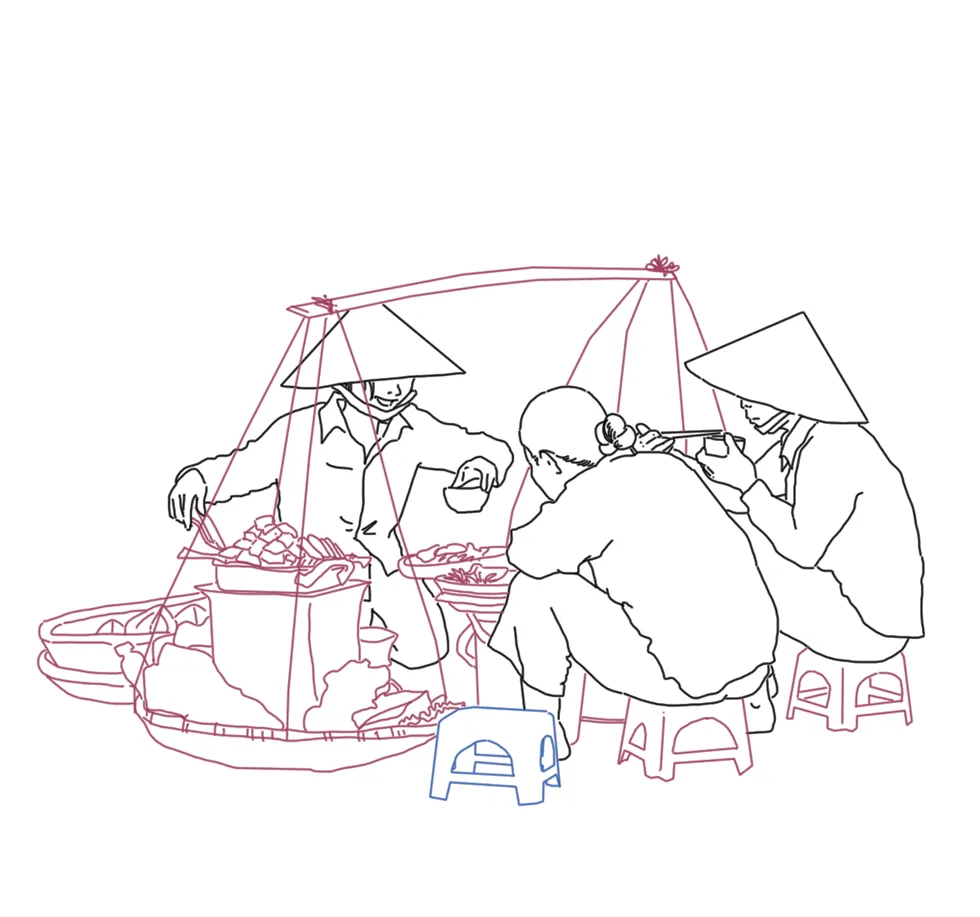
These plastic stools are convenient, inexpensive, lightweight, and have quietly become a shared symbol of the city’s informal economy and daily life. They serve as both chair and table when grabbing a meal on the sidewalk, these meals are accessible for manual laborers, students, and gig workers. They act as temporary trays and shelves for the vendors’ tools, spoons, stirring straws, scissors, and supplies. On occasion, they even double as improvised weapons during “minor” conflicts between vendors.
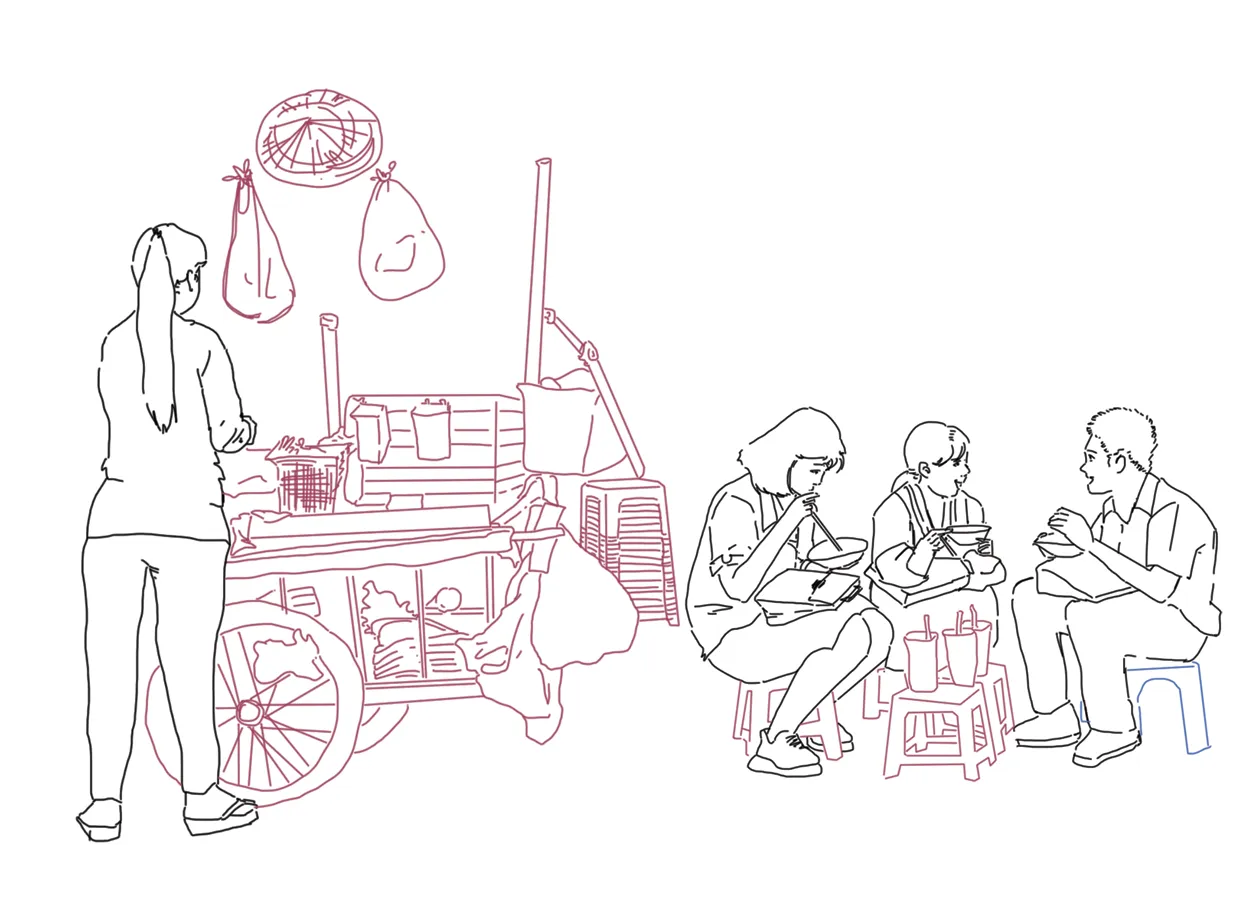
Yet behind this iconic, mundane object lies a far more complex interaction between the city’s formal and informal activities, how the government attempts to control them, and how non-governmental actors taking advantage of them.